SEMEL OHT Late Summer/Early Fall Newsletter 2026-27
Dementia Navigation Engagement Sessions: Listening, Learning, and Building Better Pathways
Over the past couple months, SEMEL OHT and community partners hosted nine Dementia Navigation Engagement Sessions, reaching more than 100 participants from across our region. We were pleased to engage members of our diverse communities, including Francophone and Indigenous populations, as well as individuals experiencing mental health challenges, addictions, and economic hardship.
We extend our sincere thanks to the Nipissing University RPN-to-RN students who helped analyze and theme the data, draft an ideal-state dementia navigation map, and work alongside community partners/ providers to gather valuable feedback on the work completed to date.
Several key themes emerged:
- The need for a printed navigation resource to help individuals living with dementia and their caregivers understand available services, care pathways, and where to seek support.
- Greater accessibility for those who are less comfortable using technology.
- Increased concerns about caregiver burnout and the need for more respite care options across the region.
- A strong desire for more in-person connection and support to address social isolation.
In response, SEMEL OHT is developing a Dementia Navigation/ Aging Well Toolkit that can be printed and shared with individuals and families requiring support. We are also exploring a new Healthy Aging section on our website, along with enhanced caregiver resources, to make it easier for people to find the services and supports they need.
These resources will align with NESGC frailty levels, helping both individuals and providers navigate services based on need and supporting appropriate referrals through frailty screening.
Finally, we are working closely with the Parkside team and Dr. Zalan to explore opportunities to integrate social prescribing into these pathways, helping address loneliness and social isolation among older adults.
There is exciting work ahead, and we look forward to sharing further updates as these initiatives continue to grow. Thank you to everyone who contributed their time, expertise, and lived experience to this important work.
Dr. Cooper - A Legacy of Leadership
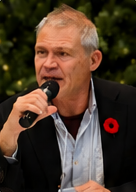
Dr. Stephen Cooper has been a remarkable leader for our OHT. It is with sadness for us, and excitement for him and his family that we celebrate his retirement as SEMEL’s Tri-Chair and Manitoulin Clinical Hub Lead.
Dr. Cooper was instrumental in bringing together Primary Care physicians and NPs across our OHT. Through patience, perseverance, listening and responding, he created the conditions for our Primary Care Network (PCN) to rapidly emerge into a forum for communication and collaboration.
Thanks to his leadership, we now clinical leads in each of our hubs, and have seen partnerships form between Family Health Organizations and Family Health Teams, as well as across Community Health Centres and NP-led Clinics. His calm wisdom leaves a valued legacy on our Primary Care Council, our PCN, and our OHT as a whole.
Thank you, Stephen!
Univi Hosts a Sudbury East Rheumatology Clinic
The power of OHT collaboration was resoundingly effective in making it possible for our Sudbury East Hub community members to access a rheumatology clinic right near home, in Noëlville! When a team from Toronto Grace Hospital reached out expressing interest in coming to Univi, we were quickly able to mobilize a successful call-out for ultrasound equipment through our Primary Care Network (PCN) and signatory partners. Within less than a month, we had an August clinic date set.
Hats off to all who made this clinic a reality. Univi’s Nicolle Plante-Dupuis, Josée Bernard and Andrew Row coordinated housing, patient booking, medical and IT equipment and medications. Dr Christine Pun, Maison McCullough and Dr Noémie Robert-Lajeunesse collaborated to locate, share and transport the ultrasound equipment. And the Toronto Grace team, Reena Ahluwalia Reilly, Dr Mohammed Mohammed, Rd Leigh Rowbottom, Dr. Raphael Rush.
Univi and rural hospitals have expressed interest in future such clinics, so we will be seeking funding opportunities to address travel, accommodations and equipment needs to improve access for SEMEL’s population. We are open to your suggestions on that.
Primary Care Funding Awarded
Thanks to a second year of funding from Ontario Health, our OHT will continue supporting Primary Care providers to attach Health Care Connect patients and provide care for the unattached. We received over 10 proposals from across our OHT for this funding.
Gratitude to our Proposal Evaluation Committee, which included Shannon Ketchabaw, Person with Lived Experience, Judy Miller from Northeast Manitoulin Family Health Team, Stéphanie Leclair from the Centre de Santé Communautaire de Sudbury, and Lisa Lee Smith from Health Sciences North. They carefully assessed the proposals using the decision-making tool which our OHT collaboratively refined over the last 18 months. The Evaluation Committee’s recommendations led to our Steering Committee funding the following teams for attachment and unattached patient supports:
- City of Lakes Family Health Team
- NEOMO Family Health Organization
- Centre de santé Univi Community Health Centre
- Manitoulin-Sudbury District Services Board Community Paramedics
- Norman Recollet Health Centre Wahnapitae First Nation
- Elliot Lake Family Health Team
- Espanola Family Health Team
Congratulations and here’s to continued improvement in primary care access for SEMEL patients!
This funding opportunity is expected to involve a highly collaborative approach across our Primary Care Network and Ontario Health Team (OHT). Teams interested in developing a proposal are encouraged to connect with Mallory Carrier (mcarrier@semel.ca) early in the process. Early engagement will help support the collaboration and coordinated planning that are key to a successful submission.
Strategic Plan Refresh
In June, our Steering Committee refreshed our OHT’s strategic plan. Our five pillars have stayed the same, as have our priority populations of Seniors, people experiencing Mental Health and Substance Use Health challenges, and unattached patients. We are focusing on 18 deliverables which mesh with the 13 expected by Ontario Health and some locally defined areas. We will be posting a visual dashboard as well as our plan on our website in the coming weeks.